Land Platform
Approximately 110 acres for Phase One within a wider 400-acre planned land framework.
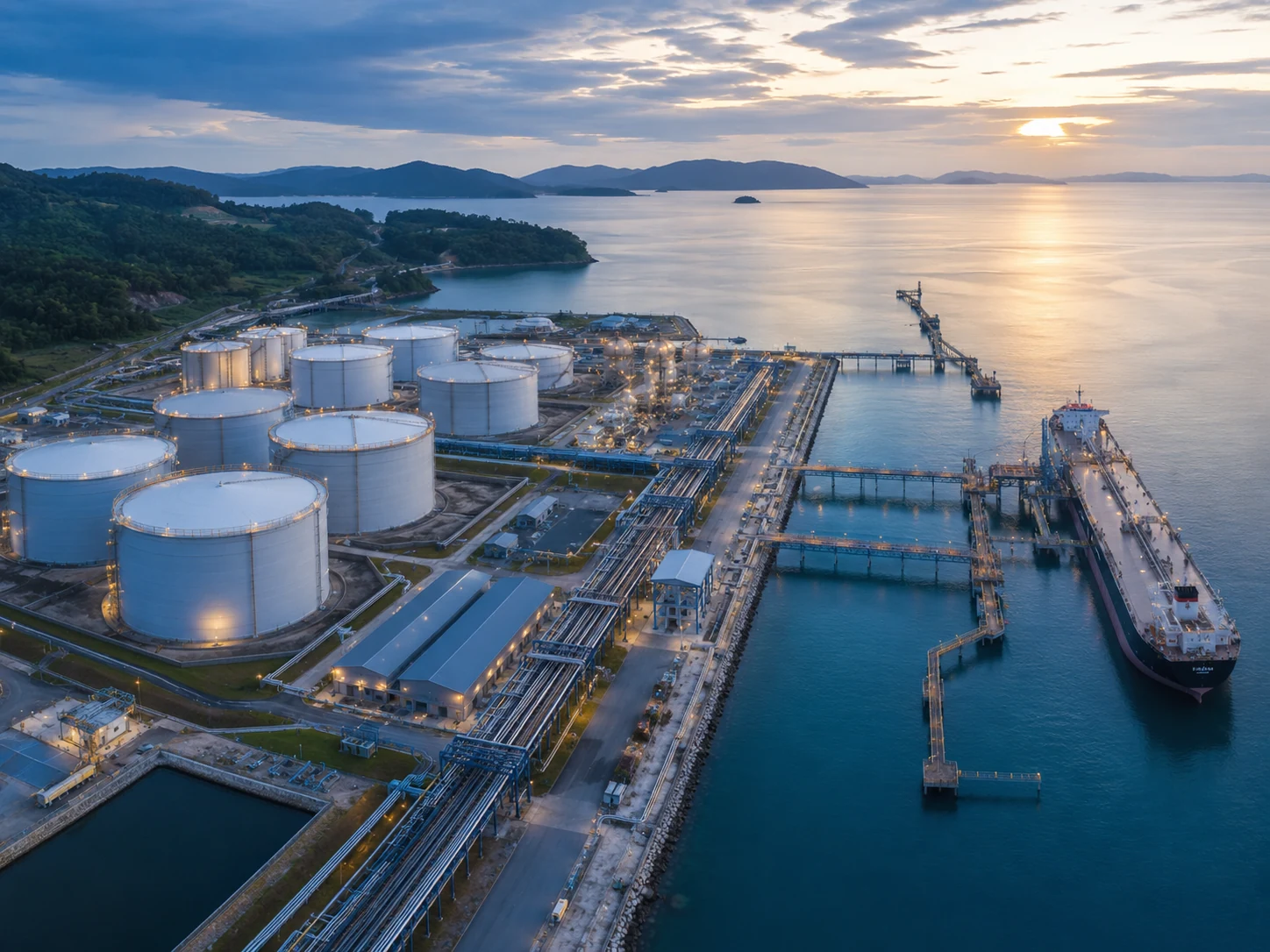
Project Neptune is planned as a multi-phase energy infrastructure development at POIC Lahad Datu, Sabah, Malaysia, connecting storage, marine access, supporting facilities, and future downstream integration.
The project profile presents the planned technical scope, location logic, and development phases for stakeholder orientation. All future-state items are described as planned or proposed where applicable.
Detailed commercial, technical, and project documents are handled through official enquiry channels.
| Location | POIC Lahad Datu, Sabah, Malaysia |
|---|---|
| Phase 1 planned storage | 1.9 million m³ |
| Phase 1 site | Approximately 110 acres / 464,689.187 m² |
| Total planned land framework | 400 acres |
| Reserved future expansion land | Approximately 290 acres |
| Water depth | 20m |
| Marine capability | VLCC berth capability referenced in project materials |
| Development model | Three planned phases: storage terminal, expansion, and refinery integration |
The public project structure is presented as a phased infrastructure platform at POIC Lahad Datu, with planned facilities described carefully and future elements identified as proposed where applicable.
Approximately 110 acres for Phase One within a wider 400-acre planned land framework.
Initial planned oil storage capacity of 1.9 million m³ with tank-farm support infrastructure.
20m water depth and VLCC berth capability referenced in current project materials.
Proposed refining and downstream integration aligned with the storage and marine platform.
Large-vessel receipt, storage, handling, and onward distribution are presented as the operating logic for the port-linked terminal.
Support facilities, power distribution, fire safety, wastewater treatment, laboratory, and maintenance buildings form the planned operating base.
Detailed commercial, technical, and project documents are handled through the official enquiry channels listed on this website.
Planned tank-farm, product storage, receipt, handling, distribution, safety systems, and supporting utilities.
Deep-water berth capability, large-vessel receipt, smaller-vessel distribution, and port-linked logistics interface.
Office building, fire station, power distribution, fire safety systems, sewage treatment, laboratory, utilities, material storage, and maintenance buildings.
Proposed refinery integration, future product handling, and supporting downstream infrastructure.
Project facts, location, planned scope, stakeholder structure, and official contact routes.
Detailed commercial, technical, and project documents.
No. Facilities described for Project Neptune are planned or proposed unless clearly stated as existing POIC context.
Project Neptune is planned as a multi-phase energy infrastructure development at POIC Lahad Datu, Sabah, Malaysia, connecting storage, marine access, supporting facilities, and future downstream integration.